Glassy Wood
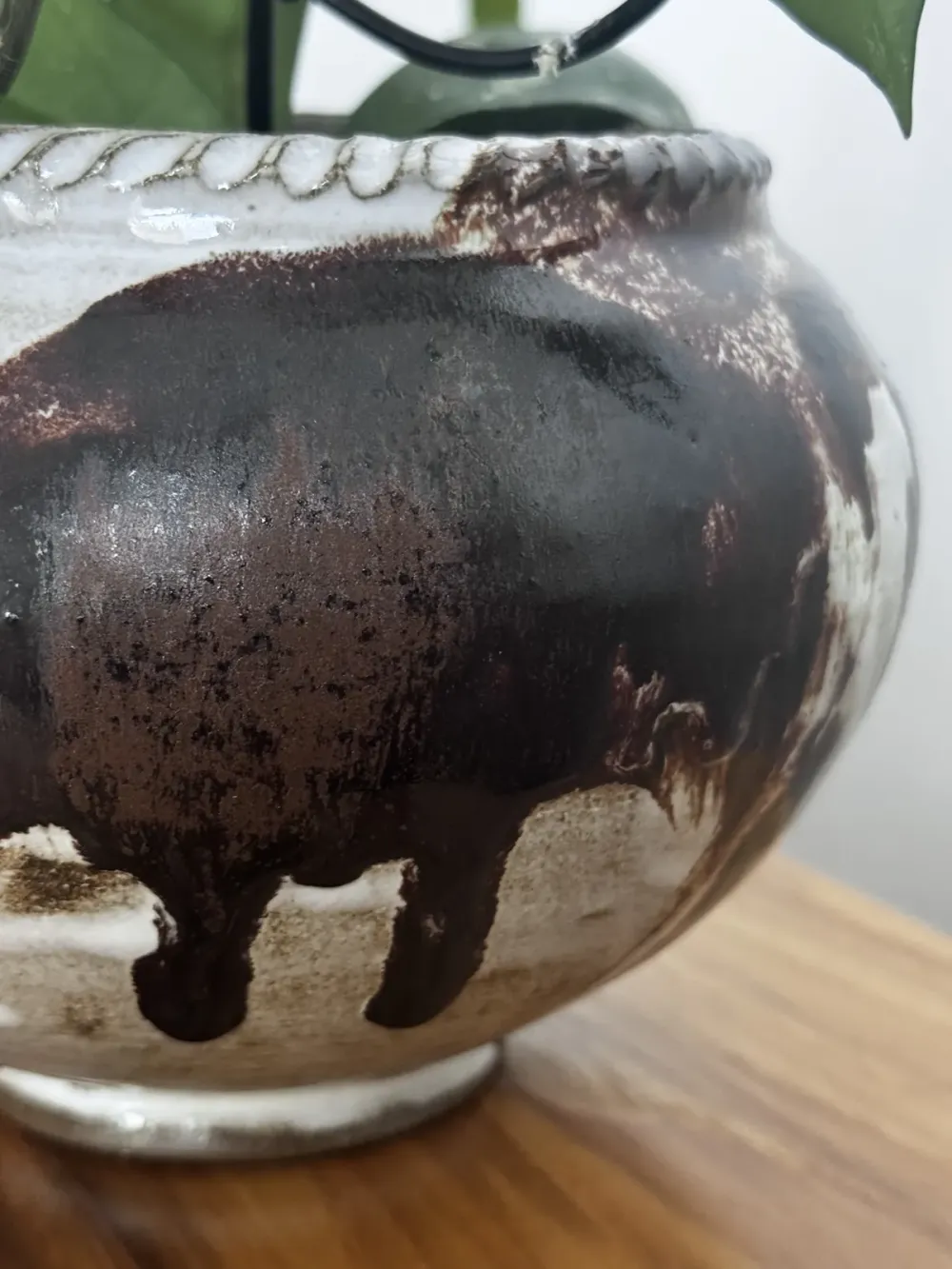
satinbrownproductionA high-iron cone 6 glaze that breaks from warm amber where thin to deep, woody red-brown where thick. The 10% red iron oxide load sits over a well-balanced dolomite-and-spodumene base, giving a glassy, gently broken surface reminiscent of polished wood grain.
| Cone | cone 6 |
| Atmosphere | oxidation |
| Surface | satin |
| Color family | brown |
| Status | production |
Ingredients
Base
| Material | % | Weight (g) |
|---|---|---|
| Ferro Frit 3134 | 21 | 210.0 |
| Spodumene | 21 | 210.0 |
| EP Kaolin | 18 | 180.0 |
| Dolomite | 16 | 160.0 |
| Silica | 14 | 140.0 |
| Minspar 200 | 10 | 100.0 |
| Total | 100.0 | 1000.0 |
Additions — % relative to base batch weight
| Material | % | Weight (g) |
|---|---|---|
| Red Iron Oxide | 10 | 100.0 |
Notes
Brief — based on the calculated Seger UMF (flux unity):
Li₂O 0.16 · Na₂O 0.13 · K₂O 0.01 · CaO 0.46 · MgO 0.24 | Al₂O₃ 0.39 · B₂O₃ 0.19 · SiO₂ 2.43 · Fe₂O₃ ~0.17
R₂O:RO is ~0.30:0.70 — the classic balanced ratio for durable cone 6 surfaces, so this should be a stable base. The melt is driven by three complementary fluxes: B₂O₃ (0.19) from Frit 3134 and Li₂O (0.16) from spodumene both lower the melting point so it matures cleanly at cone 6, while spodumene's lithium also reduces thermal expansion and helps the glaze fit the body without crazing. The high MgO (0.24) from dolomite softens the surface toward a satin/buttery feel rather than a hard gloss. At SiO₂:Al₂O₃ ≈ 6.2 the glaze lands in the satin-to-semi-gloss range. The dominant story is iron: ~0.17 Fe₂O₃ in the unity formula is a heavy load that reads amber-brown in oxidation, darkening to near-black where the glaze pools and pulling toward rust where it thins over edges — the source of the "wood grain" break. Expect colour and surface to shift noticeably with application thickness; test on the intended clay body before committing to dinnerware.
Chemical Analysis
| R₂O : RO | 0.30 : 0.70alkaline metal : alkaline earth |
| SiO₂ : Al₂O₃ | 6.18 |
| B₂O₃ | 0.19 |